
Using the ‘My School Experience’ Cards in Educational Psychology Practice
Aug 03, 2026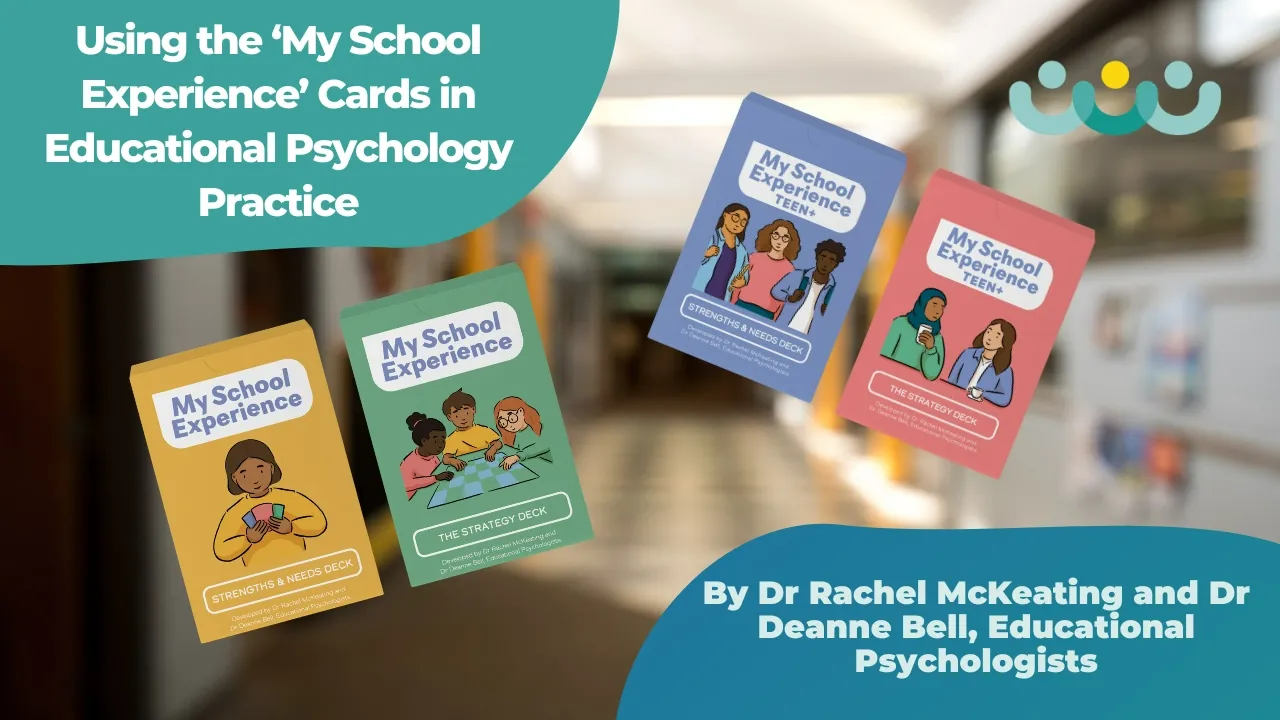
By Dr Rachel McKeating and Dr Deanne Bell, Educational Psychologists
As EPs, much of our work involves understanding children's experiences and helping them communicate their views. Whether through assessment, consultation or intervention planning, we want to understand how children experience school, what they find difficult, what helps them succeed, and what support they feel would make a difference. But for many of the children and young people we work with, articulating their experiences and responding to direct questions can be difficult, which is where structured pupil voice tools can be particularly valuable.
Why Cards?
The use of cards within Educational Psychology is not new. Many practitioners already use card sorting activities to support consultation and information gathering. These approaches recognise an important principle: it is often easier for children to respond to something concrete than to generate responses independently. Rather than having to formulate answers from scratch, children can react to statements, compare experiences, identify patterns, make choices and communicate preferences, though a much more engaging and accessible process. This can be particularly beneficial for younger children, or children with language difficulties, social communication needs, literacy difficulties, anxiety, low confidence, or those who simply find formal questioning difficult.
The idea for the My School Experience Cards came from a conversation between the two of us. We realised that we were both doing very similar things in our practice when gathering children's views about their strengths, needs and what helps them in school. We found ourselves repeatedly writing statements on Post-It notes and asking children to sort them into different categories. Although this worked well, it led us both to think that there must be a better and more effective way. After an unsuccessful search for a resource that did what we needed, we decided to create our own. What followed was a much bigger project than we had anticipated, involving lots of cards, multiple revisions and repeated prototype testing. Fortunately, the feedback from EPs, SENCOs, ELSAs and other practitioners has made it worthwhile, and we have been delighted by the positive response from those using the cards in practice.
The Four Areas of Need
The cards are organised around the four broad areas of need outlined within the SEND Code of Practice:
- Communication and Interaction
- Cognition and Learning
- Social, Emotional and Mental Health
- Sensory and Physical Needs
This structure was chosen deliberately. EPs are frequently required to formulate needs across these areas, particularly within statutory assessment work. The four areas provide a familiar framework for organising information whilst ensuring that conversations remain holistic.
Two Decks, Two Different Purposes
Although often referred to collectively as the "My School Experience Cards", there are actually two separate decks: The Strengths and Needs Deck and The Strategy Deck. Whilst they work exceptionally well together, they were designed to answer two different questions.
- What is this child's experience?
- What might help?
The Strengths and Needs Deck enables children to identify strengths, interests, preferences, challenges and barriers across the four areas of need. Children sort the cards into categories such as "Like Me", "Not Like Me" and "Sometimes Like Me", creating a structured and engaging way to explore their experiences. This helps build a balanced picture of how a child experiences school and provides a useful starting point for psychological formulation.
The Strategy Deck contains a range of support strategies drawn from evidence-informed educational practice and commonly used interventions within schools. Children sort these into categories such as "Helpful", "Not Helpful" and "Sometimes Helpful", allowing practitioners to explore support preferences and co-produce recommendations with the child.
As we know, this is a powerful approach, rather than adults deciding what support should be put in place, children are given a structured opportunity to contribute to these decisions themselves. This supports person-centred planning by ensuring that children and young people are active participants in discussions about their support, rather than passive recipients of decisions made by adults.
The decks can be used independently or together. When used together, however, they provide a particularly rich assessment process. The conversation naturally moves from understanding need to identifying solutions, mirroring the assessment-to-planning process that EPs undertake every day.
Flexible Applications in Practice
One of the most encouraging pieces of feedback we have received has been the variety of ways practitioners are using the cards.
EPs have used them:
- During EHC needs assessments
- Within consultation work
- During person-centred reviews
- As part of therapeutic interventions
- To support formulation
- To gather pupil voice before consultations
- To explore changes over time
- To identify discrepancies between home and school experiences
The cards can be used individually, with parents, with school staff, or as part of collaborative problem-solving approaches. They can be used as a straightforward sorting activity or as the starting point for much deeper psychological enquiry. The cards themselves are rarely the end point. They are often the beginning of a much richer conversation.
Theory-Informed Practice
One of the aspects we value most is the way the cards lend themselves to psychological theory-informed practice.
From a Personal Construct Psychology perspective, the cards can provide a window into how children understand themselves and their experiences. Questions such as "What made you choose that card?" or "What would need to happen for this card to move to a different pile?" can provide rich insights into children's beliefs and perceptions.
The decks also support solution-focused conversations. By exploring both strengths and difficulties, practitioners can identify what is already working well, recognise exceptions to challenges and build upon existing strengths.
The cards can also be viewed as a narrative tool. Each selection contributes to a story about how a child experiences school, helping practitioners gather pupil voice in a way that supports person-centred planning and keeps the child's perspective at the heart of assessment and intervention.
Looking Ahead: Teen+ (13-25 Years)
One of the most frequent requests we have received from EPs has been for a version suitable for older young people.
We are therefore delighted to have just launched the Teen+ version.
The new deck retains the familiar structure around the four areas of need whilst also incorporating the Preparing for Adulthood pathways:
- Employment and Skills for Work
- Independent Living
- Friends, Relationships and Community
- Health and Wellbeing
For us, moving between the four areas of need and Preparing for Adulthood outcomes can sometimes be a challenge during assessment and planning. We hope the Teen+ cards provide a practical bridge between these frameworks and becomes a useful resource to have readily available in your bag.
The content has also evolved to reflect the realities of adolescence and early adulthood. Alongside cards relating to learning, friendships and emotional wellbeing, the deck includes prompts exploring:
- Phone and internet use
- Social media
- Independent travel
- Time management
- Being punctual
- Organisation and self-management
- Future aspirations
- Independence skills
We are particularly excited about the conversations these cards may generate. Some of the most valuable information emerges when a young person begins discussing an issue that adults had not previously considered.
An Offer for EdPsychEd Readers
If you would like to try the My School Experience Cards in your own practice, we are pleased to offer EdPsychEd readers a 20% discount.
Use the code EDPSYCHED20 at checkout to receive 20% off your order.
The discount is valid until 31st August 2026.
Although the My School Experience Cards were originally designed by EPs, for EPs, we have been delighted to see SENCOs, ELSAs, inclusion leads, pastoral staff and other practitioners using them in their work too. If you have found them helpful, please tell your school colleagues about them and share how you use them in practice.
We would love to hear how you are using the cards in your setting, and any feedback you have about them. We are also keen to hear what resources or developments you would like to see next.
Stay connected with news and updates!
Sign up to receive updates, resources, inspiring blogs and early access to our courses.
Don't worry, your information will not be shared.
